
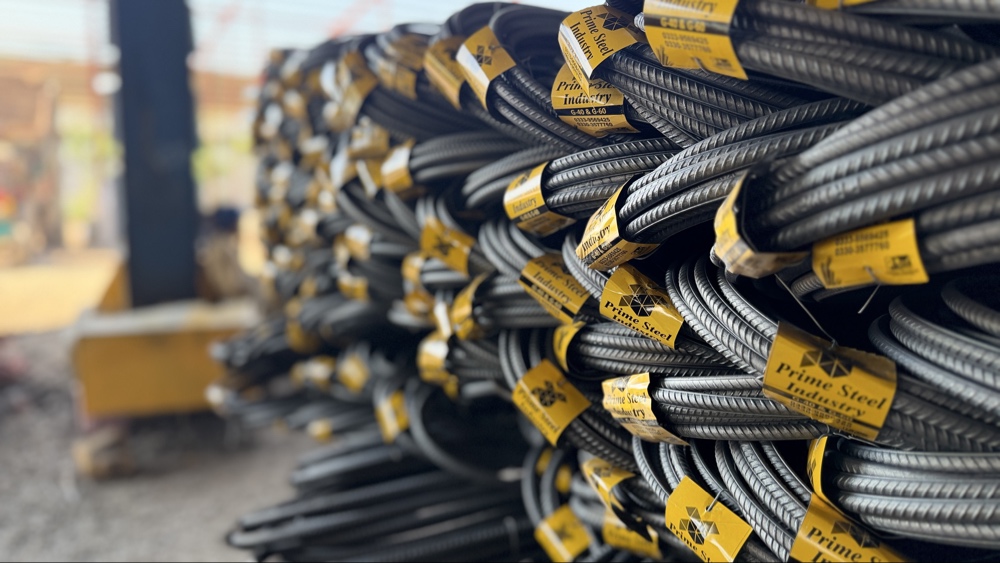
Every construction project in Pakistan — from a residential house in Peshawar to a government mega-project in Islamabad — depends on the correct grade of steel rebar. Choosing the wrong grade can compromise structural integrity, lead to costly rework, or even result in catastrophic failure. Yet, many contractors and developers still confuse Grade 40 and Grade 60 rebars, or rely on guesswork when placing orders.
At Prime Steel Industry, we manufacture both Grade 40 and Grade 60 deformed steel bars in full compliance with ASTM A615/A615M international standards. In this guide, we break down the key differences — in plain terms — so you can make the right choice for your project.
What Do 'Grade 40' and 'Grade 60' Actually Mean?
The grade number refers to the minimum yield strength of the steel bar, expressed in thousands of pounds per square inch (ksi):
- Grade 40: Minimum yield strength of 40,000 PSI (280 MPa)
- Grade 60: Minimum yield strength of 60,000 PSI (420 MPa)
In simpler terms: Grade 60 is 50% stronger than Grade 40 under load before it begins to deform permanently. This makes a significant difference in high-stress structural applications.
Mechanical Properties: Side-by-Side Comparison
Here is a quick reference comparison based on ASTM A615/A615M standards:
| Property | Grade 40 | Grade 60 |
|---|---|---|
| Yield Strength | 40,000 PSI / 280 MPa | 60,000 PSI / 420 MPa |
| Tensile Strength | 60,000 PSI / 420 MPa | 90,000 PSI / 620 MPa |
| Elongation | 11–12% (size dependent) | 7–9% (size dependent) |
| Ductility | Higher (more flexible) | Moderate |
| Standard | ASTM A615/A615M | ASTM A615/A615M |
When to Use Grade 40
Grade 40 rebar is ideal for applications where flexibility and moderate strength are required. Its higher ductility makes it easier to bend and form on-site. Recommended for:
- Residential construction — houses, boundary walls, slabs
- Light commercial buildings — shops, warehouses
- Road pavement reinforcement and footpaths
- Projects with tight budgets where Grade 60 is overspecified
For a typical single-storey or double-storey residential house in KPK, Grade 40 is structurally sufficient and more cost-effective.
When to Use Grade 60
Grade 60 is the industry standard for structural engineering and is mandatory in most government and large-scale commercial projects in Pakistan. Required for:
- High-rise buildings and commercial towers
- Bridges, flyovers, and elevated corridors
- Dams, retaining walls, and heavy infrastructure
- Defence Housing Authority (DHA) and Bahria Town specifications
- Any project governed by ASTM, BS 4449, or international codes
The Peshawar BRT elevated corridor and Mohata Dam — both projects supplied by Prime Steel — required Grade 60 rebars as per engineering specifications.
Can You Mix Grade 40 and Grade 60 in One Project?
Yes — in many projects, structural engineers specify Grade 60 for columns, beams, and shear walls, while Grade 40 may be used for slabs or non-structural elements. Always follow your structural engineer's drawings and specifications. Never substitute grades without written approval from the design engineer.
Why Source from Prime Steel Industry?
- Both Grade 40 and Grade 60 manufactured to ASTM A615/A615M
- Every batch tested in our in-house Spectro-Lab for yield, tensile, elongation, and bend
- ISO 9001:2015 certified manufacturing facility
- 300 tons daily production capacity — reliable supply for large projects
- Trusted by FWO, MES, DHA, Bahria Town, NESPAK, and BRT Peshawar
Conclusion
The choice between Grade 40 and Grade 60 is not just a cost decision — it is an engineering and safety decision. Always consult your structural engineer, follow the project specifications, and source from a certified manufacturer whose products come with documented test reports.
Prime Steel Industry supplies both grades across Pakistan with full traceability and certified quality documentation.
Contact us for bulk orders, quotations, or technical data sheets.